Showing posts with label CSR activities in Bangalore. Show all posts

Tuesday, February 17, 2026

Candy, Cartoons, and TikTok

Candy, Cartoons, and TikTok: Inside the Tobacco Industry's War on a New Generation

If you think the fight against Big Tobacco was won in the last century, you’re not alone. Many believe the days of cartoon camels and rugged cowboys are behind us, and that new products like e-cigarettes are a trendy but ultimately harmless phase. The battle-lines, however, have not disappeared—they have simply moved into the shadows and onto our children's screens.

The tobacco industry is not just surviving; it is actively and aggressively targeting a new generation of customers with a sophisticated modern playbook. To replace the millions of people who quit or die each year, the industry needs what it has internally called "replacement smokers." This strategy is succeeding: an estimated 37 million children aged 13–15 years use tobacco globally. This post, drawing from a recent World Health Organization report, uncovers the most shocking tactics being used right now to hook your children.


1. They're Selling a "Safer" Alternative That's Creating a New Wave of Addiction

The industry's most pervasive message is one of "harm reduction," positioning products like e-cigarettes and heated tobacco as safer alternatives for adult smokers. But this narrative masks a darker reality: these products are creating a gateway to addiction for a generation of youth who were never smokers in the first place. A United States study, for example, found that nearly three quarters of e-cigarette users aged 18–24 years had never smoked a combustible cigarette.

The strategy is working with alarming success. According to the WHO, children aged 13–15 are now using e-cigarettes at rates higher than adults in all WHO regions. These are not harmless water vapor devices. E-cigarettes with nicotine are highly addictive, contain toxic substances, and are proven to be harmful to health. Their use can directly affect brain development in young people, potentially leading to learning disabilities and anxiety disorders.

“History is repeating, as the tobacco industry tries to sell the same nicotine to our children in different packaging. These industries are actively targeting schools, children and young people with new products that are essentially a candy-flavoured trap. How can they talk about harm reduction when they are marketing these dangerous, highly addictive products to children?” — Dr. Tedros Adhanom Ghebreyesus, Director-General of the World Health Organization


2. They've Turned Your Kid's Phone Into a 24/7 Billboard

While traditional advertising is banned in many countries, the tobacco industry has pivoted to a digital battlefield where regulations are harder to enforce. They have aggressively colonized the platforms where youth spend their time, including Instagram, Facebook, X, TikTok, streaming services, and gaming platforms.

The scale of this effort is staggering. Marketing for just three brands—Vuse, Velo, and IQOS—has been viewed more than 3.4 billion times on social media. The industry pays influencers to promote products—sometimes using influencers who are younger than the company’s own supposed voluntary guidelines—embeds product placement in shows popular with 15- to 24-year-olds (like Stranger Things), and sponsors e-sports tournaments and online music festivals. For example, British American Tobacco’s sponsorship of the McLaren F1 team helps it promote its e-cigarette brand, Vuse, in countries like India, where e-cigarettes are banned. This pervasive, cross-border strategy normalizes their products and makes it nearly impossible for parents and regulators to monitor, let alone stop.

3. Their Products Look and Taste Like Candy

With at least 16,000 unique e-cigarette flavors on the market, the industry has weaponized taste to appeal directly to youth. Flavors like fruit and candy are cited as a primary reason young people try these products, and the numbers bear this out: nearly nine in ten youth e-cigarette users choose a flavored product.

The power of flavors is not just in attraction, but in retention. Research shows that more than 70% of young e-cigarette users would quit if the products were only available in tobacco flavor. Beyond taste, the physical designs are engineered for deception. Products are made to resemble toys, pens, lipsticks, candy, or watches, allowing for discreet use and making them easy to hide from parents and teachers.


4. They're Posing as Socially Responsible Champions

The industry’s use of "corporate social responsibility" (CSR) is a calculated disguise with two strategic goals. First, it aims to resonate with socially and environmentally conscious youth to polish a tarnished reputation. Second, it works to persuade policymakers and the public that the industry has a net positive impact on society, thereby weakening the case for stronger regulation.

Their tactics include:

• Sponsoring youth anti-smoking campaigns that research has proven are ineffective and may even foster more favorable attitudes toward the companies.

• "Greenwashing" their image by publicizing tree-planting efforts, while their cigarette filters remain a leading source of single-use plastic pollution.

• Funding academic scholarships, schools, and youth competitions to build positive brand associations and distract from their deadly business model.

This carefully crafted image stands in stark contrast to the reality: tobacco use causes more than 8 million deaths annually and costs the world US$ 1.4 trillion in economic damage every year.

5. They're Actively Sabotaging Laws Designed to Protect Children

Behind the scenes, the tobacco industry works tirelessly to "pre-empt, obstruct, defeat, weaken and delay government action" that would protect children. This is a deliberate, well-funded war on public health policy, fought through lobbying, front groups, and pseudo-science. In Switzerland, the industry funded a campaign encouraging voters to oppose restrictions on tobacco advertising specifically designed to protect children.

They weaponize the legal system to intimidate policymakers. When governments move to protect youth, the industry fights back with litigation. In both Brazil and Ireland, for example, major tobacco companies have launched legal challenges to block bans on the very "characterizing flavours" that are proven to hook children on their new products. This systematic interference in the political process is a primary reason why so many children and adolescents remain unprotected from these harmful products today.

 Rewriting the Ending

The targeting of youth is not a coincidence or a side effect; it is a deliberate, multi-faceted, and global strategy designed to secure future profits by creating a new generation of addicts. From candy-flavored vapes and TikTok influencers to phony environmental campaigns and backroom lobbying, the industry's playbook is designed to ensnare young people before they are old enough to understand the consequences.

Youth advocates, organized under the banner "Global Youth Voices," have delivered a powerful message to governments worldwide, calling on them to protect future generations. Their plea forces a critical question upon the rest of us. Now that the industry's playbook is exposed, what responsibility do we have to ensure this generation isn't just another 'replacement'?

More information at the articles below;

  1. Exposing lies, protecting lives
  2. Are e-cigarettes dangerous ?
  3. Environmental and health risks of tobacco leaf production
  4. World No Tobacco Day 2022: Tobacco’s threat to our environment 

Follow us at School Health Program and invite your teams and peers to subscribe to our newsletter ~ https://www.linkedin.com/newsletters/school-health-india-6930901981234434048/ πŸ‘ˆ 

Connect with us for implementing CSR Projects in alignment with the UN's 2030 Sustainable Development Goals.

Executed Social Projects by Trinity Care Foundation can be viewed at the link : https://www.flickr.com/photos/trinitycarefoundation/albums

Write to us at ( support@trinitycarefoundation.org ) to connect πŸ‘ˆ


Sunday, February 4, 2018

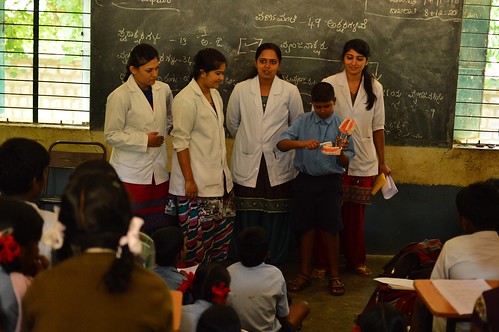
School Health in Government School- Kadugodi, Karnataka India

School Health Program by Trinity Care Foundation 


For more photographs, Visit https://flic.kr/s/aHskuUuB8f 

Corporate Social Responsibility Initiative in Bangalore India by www.trinitycarefoundation.com/csr Join us at :- www.facebook.com/trinitycarefoundation

Write to [ support@trinitycarefoundation.org ] for more Information on CSR Partnership, Internship & Volunteer Opportunities !!!

Web: www.trinitycarefoundation.com : www.trinitycarefoundation.org
Impact : https://www.flickr.com/photos/trinitycarefoundation/albums

Wednesday, November 16, 2016

Children fail at school | A result of uncorrected visual impairment.


A simple sight test and eyeglasses or contact lenses could make a dramatic difference to the lives of more than 150 million people who are suffering from poor vision. Children fail at school, adults are unable to work and families are pushed into poverty as a result of uncorrected visual impairment.


On 12 October 2006, the World Health Organization (WHO) has released new global estimates which, for the first time, reveal that 153 million people around the world have uncorrected refractive errors (more commonly known as near-sightedness, far-sightedness and astigmatism). Refractive errors can be easily diagnosed, measured and corrected with eyeglasses or contact lenses, yet millions of people in low and middle income countries do not have access to these basic services.

Without appropriate optical correction, millions of children are losing educational opportunities and adults are excluded from productive working lives, with severe economic and social consequences. Individuals and families are frequently pushed into a cycle of deepening poverty because of their inability to see well. At least 13 million children (age 5 to 15) and 45 million working-age adults (age 16 to 49) are affected globally. Fully 90% of all people with uncorrected refractive errors live in low and middle income countries.


Refractive errors occur when the eye is not able to correctly focus images on the retina. The result is blurred vision, which is sometimes so severe that it creates functional blindness for affected individuals. The three most common refractive errors are:
  1. Myopia (nearsightedness) – this is difficulty in seeing distant objects clearly.
  2. Hyperopia also known as Hypermetropia (farsightedness) – this is difficulty is seeing close objects clearly.
  3. Astigmatism – This is distorted vision resulting from an irregularly curved cornea. 
In general, These projects reach populations who are underserved or who have limited or no access to eye health care services. The program funds high-quality, sustainable projects that deliver eye care services, develop infrastructure, train personnel and/or provide rehabilitation and education in underserved communities.
You could start Corporate Social Responsibility (CSR) Initiatives for your Company in association with us. Such healthcare projects will make CSR contribution targeted, making them simple to execute as turnkey CSR projects. ‘Promoting healthcare’ is an area identified under schedule VII of the Companies Act 2013 that is eligible to receive CSR funding either directly or through an implementing agency that has a track record.

TCF [ Trinity Care Foundation ] is making a call to you to partner, invest in and contribute to this critical constituent of India’s health, development and future well-being.
Activities implemented by Trinity Care Foundation with track record of 9+ years in priority areas of health.
Contributions to TCF  eligible for inclusion under CSR spend as per the Companies Act  AND eligible for 50% deduction under section 80G of the Income Tax Act.
Registered with the Ministry of Home Affairs under Section 11 (1) of the Foreign Contributions (Regulation) Act (FCRA), 2010. It is also registered with the National Health Mission and NITI Aayog.
‘Preventive healthcare’ is an area identified under schedule VII of the Companies Act 2013 that is eligible to receive CSR funding either directly or through an implementing agency that has a track record.

For CSR partnership,
Write to – support@trinitycarefoundation.org  or
Call Dr. Thomas +91 9880396666 or Mr. Binu +91 9880358888

Please visit our link : https://www.flickr.com/photos/trinitycarefoundation/albums  related to Social responsibility initiatives focusing on underprivileged children.

Visit : www.trinitycarefoundation.com 

Sunday, October 16, 2016

Saving Lives ! Improving Health with Handwashing with Soap


Studies show that washing hands with soap is one of the most effective and inexpensive ways to prevent diseases: it can cut deaths from diarrhea by almost half and from acute respiratory infections by a quarter.

As part of school health initiative by Trinity Care Foundation in Karnataka State, India.

But handwashing with soap is not an event it is a behavior.  Keeping hands clean is one of the most important steps one can take to avoid getting sick and spreading germs to others. People all over the world wash their hands with water. But washing hands with water alone is significantly less effective than washing hands with soap in terms of removing germs.

Handwashing with soap works by interrupting the transmission of disease. Hands often act as vectors that carry disease-causing pathogens from person to person, either through direct contact or indirectly via surfaces. When not washed with soap, hands that have been in contact with human or animal feces, bodily fluids like nasal excretions, and contaminated foods or water can transport bacteria, viruses and parasites to unwitting hosts.


In Karnataka State, India, our school health program focuses its efforts on boosting child education as it relates to good hygiene practices. They do this by working with schools to improve both access to better hygiene facilities, such as latrines and hand washing stations, and by teaching students and staff how important good hygiene practices are in making them healthier, like washing hands with soap at key times (after using a latrine or before eating). For more information, please visit : http://www.trinitycarefoundation.com/schoolhealth/ | https://flic.kr/s/aHsjZuw5P6 

You could start off Corporate Social Responsibility/CSR initiative for your Company in association with Trinity Care Foundation ! TCF [ Trinity Care Foundation ] is making a call to you to partner, invest in and contribute to this critical constituent of India’s health, development and future well-being.

Fund to be deployed in areas identified for CSR in Schedule VII of the Companies Act and aligned with provisions of Section 135 of the Act

  1. Activities implemented by not-for-profit  Trust (TCF) with track record of 9+ years in priority areas of health.
  2. Contributions to TCF  eligible for inclusion under CSR spend as per the Companies Act  AND eligible for 50% deduction under section 80G of the Income Tax Act
  3. Registered with the Ministry of Home Affairs under Section 11 (1) of the Foreign Contributions (Regulation) Act (FCRA), 2010. It is also registered with the National Health Mission and NITI Aayog.

Write to us [ Email id : support@trinitycarefoundation.org ] or
Call Dr. Thomas +91 9880396666 or Mr. Binu +91 9880358888 |

More – http://trinitycarefoundation.com/csr

Sunday, September 11, 2016

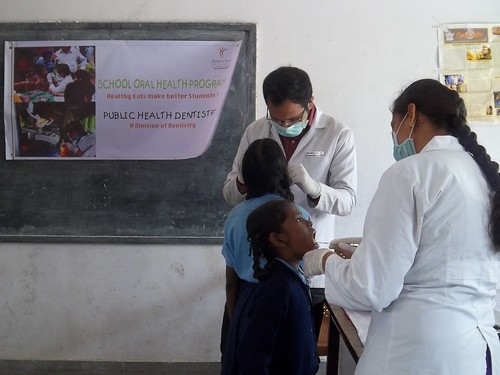
School Dental Program


We are looking for Public Health Professionals interested in School Health.


If you know anyone who is interested please ask them to get in touch with us at : support@trinitycarefoundation.org , Thanks so much.


Bosch India Csr | School Healthcare


Please visit our link : https://www.flickr.com/photos/trinitycarefoundation/albums  related to Social responsibility initiatives focusing on underprivileged children. 


dental public health india

Trinity Care Foundation is a Public Health Organization focusing on Craniofacial Surgeries, School Health Programs and Outreach Health Programs in Karnataka, India.
Twitter  https://twitter.com/tcfindia |
Instagram https://www.instagram.com/trinitycarefoundation/