Showing posts with label school health program. Show all posts

Sunday, February 10, 2019

Health Program in Kittur Rani Chennamma School, Anekal Taluk

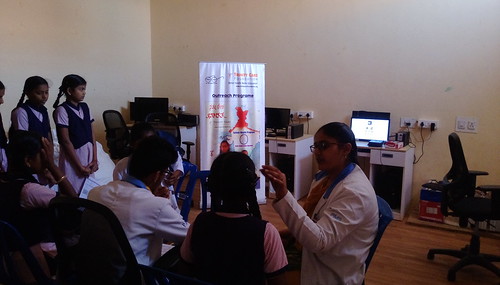
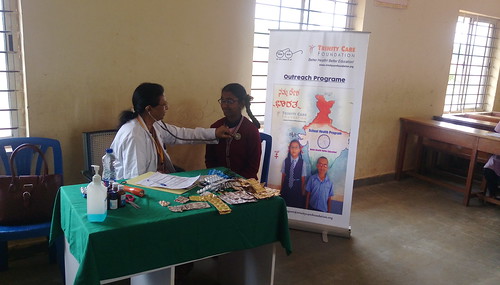
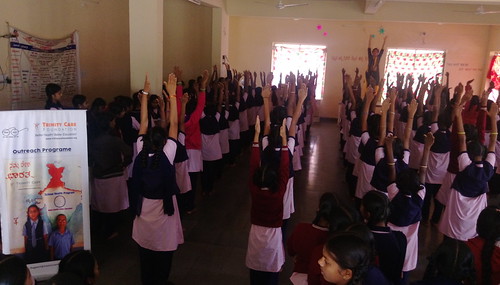
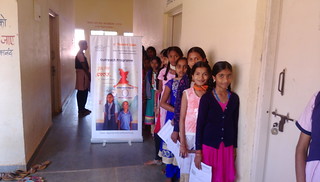
As part of Health project in low-income schools, Trinity Care Foundation had covered Kittur Rani Chennamma School, Anekal Taluk on 13.Nov.2018 and undertook Health Screening, Health Education and providing Health Kits and others free of cost.

Health Program

The details of the school health program for the government schools can be reviewed here : http://www.trinitycarefoundation.com/schoolhealth

For more details, Visit https://flic.kr/s/aHsmwF7Ux4


Health Program - Eye Screening


Health Program - Medical screening

Health Program - Yoga in motion


Trinity Care Foundation is a Public Health Organization, has the Trust registration, PAN, TAN, 12A, 80G, Professional tax and FCRA. It is registered with NITI Ayog, Government of India. It is National Health Mission Partner in Karnataka, India. Corporate social responsibility/CSR projects : www.trinitycarefoundation.com/csr

Contact Us to implement your company's Corporate Social responsibility/CSR Projects:

Email: support@trinitycarefoundation.org | tel: +91 988039 6666 | +91 988035 8888 ~ www.facebook.com/trinitycarefoundation

Website : www.trinitycarefoundation.com
Instagram : www.instagram.com/trinitycarefoundation
Impact : www.flickr.com/photos/trinitycarefoundation/albums
Twitter : https://twitter.com/tcfindia 

Friday, December 19, 2014

School Health Bangalore - Need Doctor's/ Dentist's/Public Health Professionals/Other's

Second Phase of School Health Programs in Government Schools has begun in Bangalore focusing on Health Education, Health Screening, Treatment and Follow-up of around 7200.


If You or Your Friends express interest, Email us your resume to -support@trinitycarefoundation.org | 
"Review -https://www.flickr.com/photos/trinitycarefoundation/sets/ " before sending  | Need Committed Doctor's/Dentist's/Public Health Professionals |   

To Partner with us for Corporate Social Responsibility Projects  | Email :-  support@trinitycarefoundation.org |
To learn more :-  Website |  Facebook  |  LinkedIn |  Twitter  | Pinterest | Flickr |

Friday, September 12, 2014

School Health Program India


Trinity Care Foundation is a Public Health Organization Focused on Facial Deformities, School Health Programs and Outreach Health Programs. Twitter - https://twitter.com/tcfindia 


Tuesday, February 18, 2014

Tricky Teenage Subjects: Effective Adolescent Health Education

Health education is an absolutely vital factor in long-term health, as well as the health of future generations. Educating children about health can be as simple as teaching them about basic hygiene, such as the washing of hands after going to the toilet or how to brush one’s teeth effectively. However, some health education involves more complex subjects, such as drug abuse or HIV; topics which need especial attention when dealing with older children and young adolescents. These health risks are among the biggest threats facing our youth, and school health programmes are one of the most effective ways to positively impact on long-term public health goals, according to the World Health Organisation. 


HIV and AIDS

Because of breakthroughs in treatment options, HIV and AIDS are no longer in every headline, unlike only a few short years ago. While this can make it harder to impress upon students how serious the impact of the virus can be, it is nonetheless essential to convey the message effectively. Despite the fact that many associate the virus with intravenous drug use and homosexual intercourse – and while these are risk factors in transmission of HIV – 88.2% of transmission cases in 2011-2012 were via heterosexual intercourse. Nearly 200,00 HIV-related deaths were reported in 2011-2012, and more than 120,000 new cases of infection were recorded. Education about safe sexual practices, the relationship between HIV transmission and drug use, the availability of health services such as HIV testing and free condoms is vital to protect teenagers against this disease. 


Drug and Alcohol Abuse

For many teenagers, drug abuse is an easy trap to fall into. Many children grow up seeing various types of substance abuse in their communities, and have not been educated sufficiently about the dangers of drugs, including alcohol and tobacco. The easy availability of cheap “poppers” like aerosol inhalants, and the lax attitude of some retailers towards selling alcohol and tobacco to minors, make the dangers of substance abuse all the more prevalent and damaging. According to the World Health Organisation, alcohol is responsible for approximately 2.5 million deaths every year, which is nearly 4% of deaths worldwide. In India, alcohol-related deaths are on the rise, with 5,478 deaths caused by alcohol in 2012, 21% more than the 4547 cases in 2011. Traffic accidents are a primary cause of alcohol-related deaths, along with liver and brain complications. Toxic or contaminated home-made alcohol is also responsible for deaths from poisoning. Drug abuse is also highly prevalent; according to the World Health Organisation, there are as many as a million known heroin addicts in India, with an estimated further four million who are not registered in treatment programmes. Heroin, cannabis, and Indian-produced pharmaceutical drugs are the most commonly abused drugs. Although teenagers can be inclined to think of experimenting with substances as fun and exciting, it is important to impress upon them not only the dangers of substance abuse, but also to teach them how to recognize the signs of substance abuse in themselves and their peers, and how to seek help.


Sexual Safety


Sexual Safety extends much further than worrying about HIV and AIDS, and includes the risks of other sexually transmitted infections, as well as the risks of teen pregnancy. India, where many girls are married before the age of 19, has a very high rate of teenage pregnancy, which results in a loss of education for women, as well as physical health risks. Adolescent girls under the age of 16 who fall pregnant are four times as likely to die than women in their twenties, while the infant mortality rates of teenage pregnancies are approximately 50% higher than the rates of older women, according to the World Health Organisation. While the cultural aspect of young marriage is not something to be addressed in a health class, the health risks of unintended or young pregnancy are, and educating both young women and men about reproductive health is one of the most effective ways to begin to turn the tide. Additionally, the problem of sexual violence is an important one, and while girls are often taught to try to avoid situations in which they could encounter rape and other forms of sexual violence, it is important to impress upon adolescent boys, too, that these crimes hold severe consequences for them. 

Trinity Care Foundation is a Non Governmental Organization focusing on Craniofacial Deformities, School Health and Outreach Programs in Karnataka, India.We require your Support to implement these community Health Programs in Government Schools and Colleges in Ramanagara, Kolar and Bangalore Rural Districts in Karnataka State, India.  
Kindly write to us : support@trinitycarefoundation.org   | http://trinitycarefoundation.org/ |  

Oral health

Oral health 

Fact sheet - April 2012 

Key facts

  • Worldwide, 60–90% of school children and nearly 100% of adults have dental cavities.
  • Dental cavities can be prevented by maintaining a constant low level of fluoride in the oral cavity.
  • Severe periodontal (gum) disease, which may result in tooth loss, is found in 15–20% of middle-aged (35-44 years) adults.
  • Globally, about 30% of people aged 65–74 have no natural teeth.
  • Oral disease in children and adults is higher among poor and disadvantaged population groups.
  • Risk factors for oral diseases include an unhealthy diet, tobacco use, harmful alcohol use and poor oral hygiene, and social determinants. 
Oral health is essential to general health and quality of life. It is a state of being free from mouth and facial pain, oral and throat cancer, oral infection and sores, periodontal (gum) disease, tooth decay, tooth loss, and other diseases and disorders that limit an individual’s capacity in biting, chewing, smiling, speaking, and psycho-social well being.

Oral diseases and conditions

The most common oral diseases are dental cavities, periodontal (gum) disease, oral cancer, oral infectious diseases, trauma from injuries, and hereditary lesions.

Dental cavities

Worldwide, 60–90% of school children and nearly 100% of adults have dental cavities, often leading to pain and discomfort. 

Periodontal disease

Severe periodontal (gum) disease, which may result in tooth loss, is found in 15–20% of middle-aged (35-44 years) adults.

Tooth loss

Dental cavities and periodontal disease are major causes of tooth loss. Complete loss of natural teeth is widespread and particularly affects older people. Globally, about 30% of people aged 65–74 have no natural teeth.

Oral cancer

The incidence of oral cancer ranges from one to 10 cases per 100 000 people in most countries. The prevalence of oral cancer is relatively higher in men, in older people, and among people of low education and low income. Tobacco and alcohol are major causal factors.

Fungal, bacterial or viral infections in HIV

Almost half (40–50%) of people who are HIV-positive have oral fungal, bacterial or viral infections. These often occur early in the course of HIV infection.

Oro-dental trauma

Across the world, 16-40% of children in the age range 6 to 12 years old are affected by dental trauma due to unsafe playgrounds, unsafe schools, road accidents, or violence.

Noma

Noma is a gangrenous lesion that affects young children living in extreme poverty primarily in Africa and Asia. Lesions are severe gingival disease followed by necrosis (premature death of cells in living tissue) of lips and chin. Many children affected by noma suffer from other infections such as measles and HIV. Without any treatment, about 90% of these children die.

Cleft lip and palate

Birth defects such as cleft lip and palate occur in about one per 500–700 of all births. This rate varies substantially across different ethnic groups and geographical areas.

Common causes

Risk factors for oral diseases include an unhealthy diet, tobacco use and harmful alcohol use. These are also risk factors for the four leading chronic diseases – cardiovascular diseases, cancer, chronic respiratory diseases and diabetes – and oral diseases are often linked to chronic disease. Poor oral hygiene is also a risk factor for oral disease.
The prevalence of oral disease varies by geographical region, and availability and accessibility of oral health services. Social determinants in oral health are also very strong. The prevalence of oral diseases is increasing in low- and middle-income countries, and in all countries, the oral disease burden is significantly higher among poor and disadvantaged population groups.

Prevention and treatment

The burden of oral diseases and other chronic diseases can be decreased simultaneously by addressing common risk factors. These include:
  • decreasing sugar intake and maintaining a well-balanced nutritional intake to prevent tooth decay and premature tooth loss;
  • consuming fruit and vegetables that can protect against oral cancer;
  • stopping tobacco use and decreasing alcohol consumption to reduce the risk of oral cancers, periodontal disease and tooth loss;
  • ensuring proper oral hygiene;
  • using protective sports and motor vehicle equipment to reduce the risk of facial injuries; and
  • safe physical environments.
Dental cavities can be prevented by maintaining a constant low level of fluoride in the oral cavity. Fluoride can be obtained from fluoridated drinking water, salt, milk and toothpaste, as well as from professionally-applied fluoride or mouth rinse. Long-term exposure to an optimal level of fluoride results in fewer dental cavities in both children and adults.
Most oral diseases and conditions require professional dental care, however, due to limited availability or inaccessibility, the use of oral health services is markedly low among older people, people living in rural areas, and people with low income and education. Oral health care coverage is low in low- and middle- income countries.
Traditional curative dental care is a significant economic burden for many high-income countries, where 5–10% of public health expenditure relates to oral health. In low- and middle-income countries, public oral health programmes are rare. The high cost of dental treatment can be avoided by effective prevention and health promotion measures.

WHO response

Public health solutions for oral diseases are most effective when they are integrated with those for other chronic diseases and with national public health programmes. The WHO Global Oral Health Programme aligns its work with the strategy of chronic disease prevention and health promotion. Emphasis is put on developing global policies in oral health promotion and oral disease prevention, including:
  • building oral health policies towards effective control of risks to oral health;
  • stimulating development and implementation of community-based projects for oral health promotion and prevention of oral diseases, with a focus on disadvantaged and poor population groups;
  • encouraging national health authorities to implement effective fluoride programmes for the prevention of dental caries;
  • advocacy for a common risk factor approach to simultaneously prevent oral and other chronic diseases; and
  • providing technical support to countries to strengthen their oral health systems and integrate oral health into public health.

For more information contact:
WHO Media centre
Telephone: +41 22 791 2222
E-mail: mediainquiries@who.int 

Wednesday, January 8, 2014

School Health Initiative in Bangalore

The School Health Program is defined as “the school procedures that contribute to the maintenance and improvement of the health of pupils and school personnel including health services healthful living and health education”.
school health program india
But to speak the truth our school hardly ever has a well defined School Health Programme incidentally the teaching about health is done while treating other subjects of the curriculum -such as physiology, hygiene and biology. The approach to these subjects is so academic that they are considered to be important from the ‘examination point of view’ and have very little effect on actual health practices and attitudes.

school health program


school health screening india

school oral health program

But in general, school health education should be integrated with all the activities in the curriculum. It should be a part and parcel of the chili’s daily life. It must include the whole life of the child taking in to consideration his relationship with the school community as well as the community outside the school. 
  1. The promotion of positive health;
  2. The prevention of diseases;
  3. Early diagnosis, treatment and follow up of defects;
  4. Awakening health consciousness in children:  


How to start off CSR Programs in Community Health Care for your Company ?
  1. Please get in touch with us, call/sms +91 9880394959
  2. We will discuss various health programs we conduct.
  3. Choose the one which you would like to promote.
  4. We’ll discuss the plan and provide you reports/results on how we conducted. 
  5. Write to us - support@trinitycarefoundation.org . 

Tuesday, September 20, 2011

What is a health promoting school?

A health promoting school is one that constantly strengthens its capacity as a healthy setting for living, learning and working. 
health services
School Health Program

A health promoting school:

  • Fosters health and learning with all the measures at its disposal.
  • Engages health and education officials, teachers, teachers' unions, students, parents, health providers and community leaders in efforts to make the school a healthy place.
  • Strives to provide a healthy environment, school health education, and school health services along with school/community projects and outreach, health promotion programmes for staff, nutrition and food safety programmes, opportunities for physical education and recreation, and programmes for counselling, social support and mental health promotion.
  • Implements policies and practices that respect an individual's well being and dignity, provide multiple opportunities for success, and acknowledge good efforts and intentions as well as personal achievements.
  • Strives to improve the health of school personnel, families and community members as well as pupils; and works with community leaders to help them understand how the community contributes to, or undermines, health and education.

Health promoting schools focus on:

public health
Health Edication


  • Caring for oneself and others
  • Making healthy decisions and taking control over life's circumstances
  • Creating conditions that are conducive to health (through policies, services, physical / social conditions)
  • Building capacities for peace, shelter, education, food, income, a stable ecosystem, equity, social justice, sustainable development.
  • Preventing leading causes of death, disease and disability: helminths, tobacco use, HIV/AIDS/STDs, sedentary lifestyle, drugs and alcohol, violence and injuries, unhealthy nutrition.
  • Influencing health-related behaviours: knowledge, beliefs, skills, attitudes, values, support.
Trinity Care Foundation is a Non Governmental Organization focusing on Craniofacial Deformities, School Health and Outreach Programs in Karnataka, India. We require your support to implement these Community Health Programs in Government Schools and Colleges in Ramanagara, Kolar and Bangalore Rural Districts, Karnataka, India. 
 
Kindly Contact usEmail: support@trinitycarefoundation.org 

School Youth Health - WHO Website link

Trinity Care Foundation Website link.. :- Implementing School Health Programs in Bangalore, India.


Friday, June 17, 2011

School Health

Why Schools?

The healthy development of children and adolescents is influenced by many societal institutions. After the family, the school is the primary institution responsible for the development of young people in the United States.
  • Schools have direct contact with more than 95 percent of our nation’s young people aged 5–17 years, for about 6 hours a day, and for up to 13 critical years of their social, psychological, physical, and intellectual development.
  • government schools
    School Oral Health Program 
  • Schools play an important role in improving students’ health and social outcomes, as well as promoting academic success.

Why School Health?

The health of young people is strongly linked to their academic success, and the academic success of youth is strongly linked with their health. Thus, helping students stay healthy is a fundamental part of the mission of schools. After all, schools cannot achieve their primary mission of education if students and staff are not healthy.
    
    school health
    School Health Program 
  • Health-related factors, such as hunger, chronic illness, or physical and emotional abuse, can lead to poor school performance.
  • Health-risk behaviors such as substance use, violence, and physical inactivity are consistently linked to academic failure and often affect students' school attendance, grades, test scores, and ability to pay attention in class.
The good news is that school health programs and policies may be one of the most efficient means to prevent or reduce risk behaviors and prevent serious health problems among students.Effective school health policies and programs may also help close the educational achievement gap.

Trinity Care Foundation is a Non Governmental Organization dedicated to School Health Programs, Facial Deformity Programs and Oral Cancer Programs in Bangalore, India.We require your Support to implement these Community Health Programs in Government Schools and Colleges in Ramanagara, Kolar and Bangalore Rural Districts. Kindly Contact us.. Email: support@trinitycarefoundation.org

Trinity Care Foundation Website

Facebook Page of Trinity Care Foundation